Online visit · $45 flat · No video
Altitude sickness medicine online
Yes, you can get altitude sickness medicine online. Bidwell Health offers a $45 asynchronous visit (no video, no subscription) for adults in eligible states heading to high altitude, Cusco, Machu Picchu, Colorado, Kilimanjaro, and similar. A licensed clinician reviews your trip and, when it is clinically appropriate, sends acetazolamide (Diamox) to your local pharmacy, where you pay the generic price with nothing added.
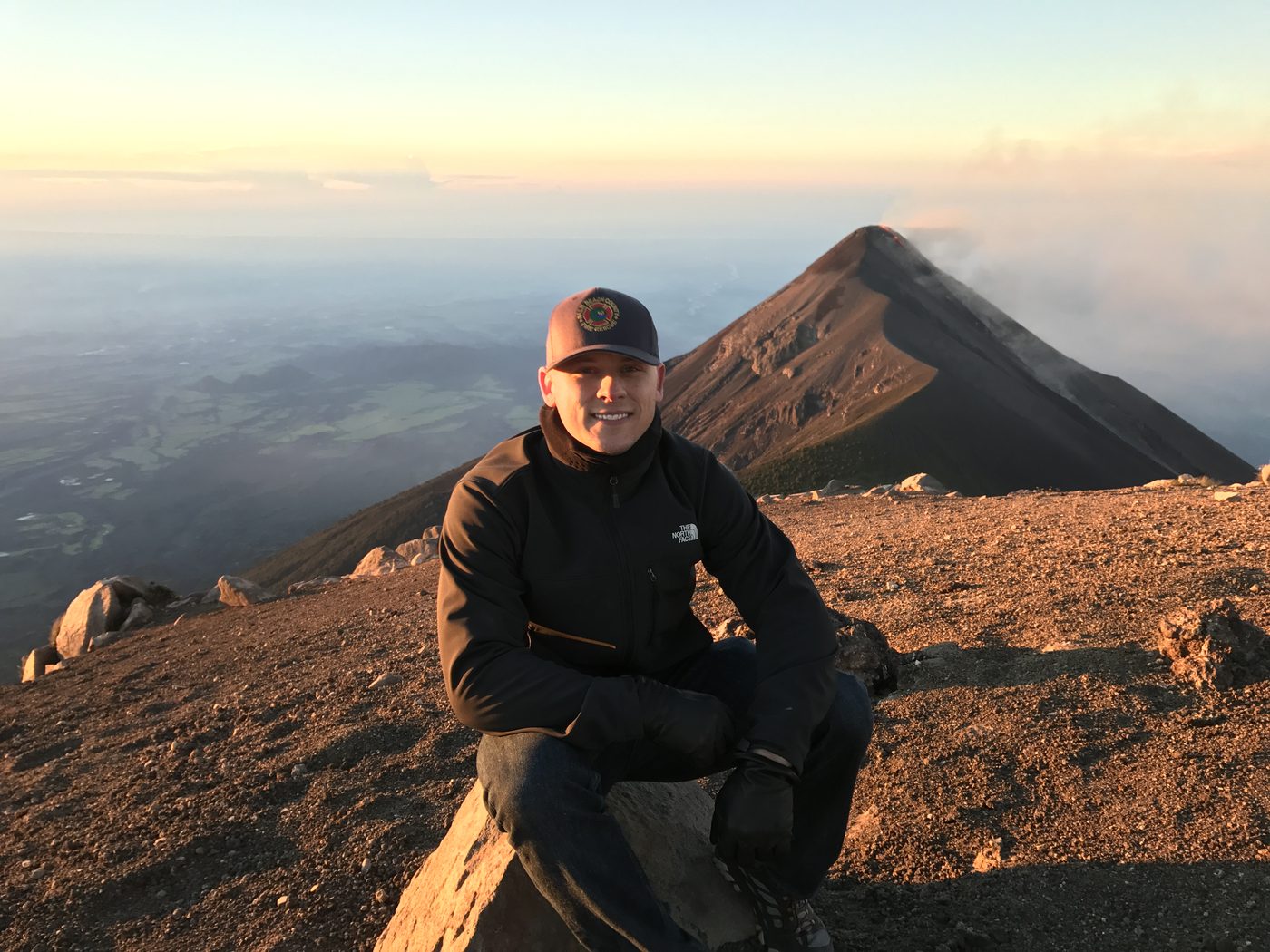
I have had altitude sickness firsthand. That is me at sunrise on Acatenango in Guatemala, after climbing past 13,000 feet in a day, and I have felt it again on Colorado 14ers above 14,000 feet: the pounding headache, the sleepless night, the breathlessness on the final push. Acetazolamide and a sensible ascent are what make those trips possible, and they are exactly what we screen for and prescribe here. I built this because I have been the traveler trying to sort this out before a climb.
Bidwell Cranage, Bidwell Health founder, on Acatenango (Guatemala). One of 26 countries traveled.
What we prescribe
Acute mountain sickness (the headache, nausea, fatigue, and poor sleep that hit when you go up too fast) is your body struggling to acclimatize. Acetazolamide (Diamox) speeds that acclimatization up.
| Medication | What it does | How you get it |
|---|---|---|
| Acetazolamide (Diamox) | Helps you acclimatize faster; prevents and reduces acute mountain sickness | Prescription, this $45 visit, sent to your pharmacy |
It does not replace a smart ascent. Going up gradually, sleeping at a lower elevation than your daytime high point, and staying hydrated still matter. Acetazolamide makes the climb safer, it does not make a reckless one safe.
Dose, side effects, and the rule that matters most. The usual dose is 125 mg twice a day, started the day before you go up and continued through ascent and the first days at your target sleeping altitude, with the stop date set for your itinerary. Common side effects can include: tingling in the fingers, toes, or lips, more frequent urination, and a flat or fizzy taste to carbonated drinks. Avoid combining it with high-dose aspirin or other salicylates. And the pill is never a license to push through warning signs: a severe headache, confusion, trouble walking, breathlessness at rest, chest tightness, blue lips, or a cough with frothy spit means descend and get emergency care, not take more medicine. We send written start, continue, side-effect, and when-to-descend instructions with the prescription.
Who it is for, and who it is not
A good fit if you
- Are 18 or older and in a state we serve
- Are traveling above roughly 8,000 feet (Cusco, Colorado peaks, Kilimanjaro, etc.)
- Have a fast ascent planned or have had altitude sickness before
- Want to prevent the headache and nausea that can ruin a trip
Not a fit if you
- Have had a severe sulfa reaction (anaphylaxis, Stevens-Johnson)
- Have severe kidney or liver disease
- Have adrenal insufficiency (Addison disease)
- Have significant electrolyte problems, such as low sodium or potassium
- Have sickle cell trait or disease
- Are pregnant or breastfeeding
- Already have warning signs (confusion, trouble walking, breathlessness at rest)
Why we screen it this way
Acetazolamide is a non-antibiotic sulfonamide. A previous sulfonamide-antibiotic allergy does not automatically rule it out, but the reaction must be reviewed. The WMS guidance treats prior sulfonamide anaphylaxis or Stevens-Johnson syndrome as contraindications. Other acetazolamide contraindications and health conditions still matter, including a prior reaction to acetazolamide itself. Do not try a test dose on your own; your clinician decides whether a supervised trial or a different plan is appropriate.
How it works
- 1. Tell us your trip (destination, how high you will sleep, how fast you ascend) and your health. About 3 minutes, no video.
- 2. A licensed clinician reviews your answers, usually the same day.
- 3. If it is clinically appropriate, we send acetazolamide to your pharmacy. Start it the day before you ascend.
How we keep this safe and legitimate
Acetazolamide is a prescription medicine, and we run this like a clinic plus a real pharmacy, not an "altitude kit" store. Every request is reviewed by a U.S.-licensed nurse practitioner who looks at your exact elevations, sleeping altitude, ascent rate, prior altitude history, and health before prescribing. We never offer it with "no prescription needed," and we never sell a one-size-fits-all pack. We screen sulfa-reaction severity, kidney and liver disease, adrenal problems, sickle cell, electrolyte issues, pregnancy, lung and heart conditions, and interacting medicines like high-dose aspirin and diuretics. If acetazolamide is appropriate, we name the exact dose and directions and send it to your own licensed U.S. pharmacy with a normal label, not loose, unlabeled, or foreign-packaged pills. You can verify any U.S. pharmacy through the FDA's BeSafeRx program or your state board of pharmacy, and a pharmacist there can answer medication questions. We follow normal privacy and HIPAA practices.
FAQ
Can I get altitude sickness medicine online?
Yes. Bidwell Health offers a $45 asynchronous online visit, no video and no subscription, for adults in eligible states traveling to high altitude. A licensed clinician reviews your trip and health and sends acetazolamide (Diamox) to your pharmacy when clinically appropriate.
What medication prevents altitude sickness?
Acetazolamide (Diamox) is the standard medication to prevent and reduce acute mountain sickness. It helps your body acclimatize faster. It is usually started the day before ascent and continued through ascent and the first days at your target sleeping altitude, with the stop date set for your itinerary.
Can I take acetazolamide if I have a sulfa allergy?
Sometimes, after individual review. A mild prior sulfonamide-antibiotic reaction is different from anaphylaxis or Stevens-Johnson syndrome. Tell the clinician which drug caused the reaction and what happened. A prior acetazolamide allergy and other medication or health contraindications must also be checked.
How much does an online altitude sickness visit cost?
Bidwell Health charges a flat $45 for the online visit, with no video and no subscription. You pay the generic acetazolamide price at your own pharmacy, with no markup added by us.
Is it safe and legitimate to get altitude sickness medicine online?
Yes, when the service works like a real clinic and pharmacy, not an 'altitude kit' store. Bidwell requires a review by a U.S.-licensed clinician who looks at your exact elevations, ascent rate, and history, never offers acetazolamide with 'no prescription needed', and never sells a one-size-fits-all pack. The prescription goes to your own licensed U.S. pharmacy with a normal label, not loose or foreign-packaged pills, and you can verify any U.S. pharmacy through the FDA's BeSafeRx program. We follow normal privacy and HIPAA practices.
Learn more
- When to start Diamox before altitude
- Do I need altitude medicine for Cusco and Machu Picchu?
- Do I need Diamox for Kilimanjaro?
- Altitude sickness in Colorado
- Altitude sickness at Grand Teton
- Altitude sickness in the Alps
- Best online travel medicine 2026
A safer ascent plan
Plan around sleeping altitude, not just the highest viewpoint. Tell your clinician where you sleep each night, how quickly you ascend and any previous altitude illness. A brief cable-car visit is different from sleeping high. Build in acclimatization days; medicine does not make a rapid ascent safe. Drink normally rather than forcing extra water. CDC altitude guidance.
Do not climb higher with symptoms of altitude illness. Stop ascending if headache with nausea, dizziness or unusual fatigue develops after ascent. Descend if symptoms worsen or fail to improve. Confusion, trouble walking, or breathlessness at rest requires immediate descent, emergency help and oxygen when available; do not wait for a pill to work. Wilderness Medical Society guidance.
Source details
CDC Yellow Book: high-altitude travel · Wilderness Medical Society 2024 guidance
Original review date: June 18, 2026 · References: Wilderness Medical Society Clinical Practice Guidelines for Acute Altitude Illness (2024); CDC Yellow Book (High-Altitude Travel and Altitude Illness); DailyMed acetazolamide label.