Altitude Sickness · Colorado
Altitude sickness in Colorado
Yes, altitude sickness is common in Colorado, mostly in the mountains rather than Denver. It usually starts above about 8,000 feet, and most Colorado ski towns sleep between 8,000 and 10,000 feet. Flatland visitors who fly in and go straight up are the ones who feel it. Acetazolamide (Diamox) can lower the risk, and because Colorado is one of our eligible states, you can be seen online whether you live here or are already in town.
It is the mountains, not the mile-high city
Denver sits at 5,280 feet and rarely causes trouble on its own. The problem is the drive up: many trips go from a Denver flight straight to a ski town two or three thousand feet higher the same afternoon. That fast gain is what triggers symptoms.
| Place | Elevation | Altitude sickness risk |
|---|---|---|
| Leadville | ~10,150 ft | High; the highest city in the US |
| Breckenridge | ~9,600 ft | High |
| Vail | ~8,150 ft | Moderate to high |
| Aspen | ~7,900 ft | Moderate |
| Estes Park (gateway to Rocky Mountain NP) | ~7,500 ft | Moderate |
| Denver | 5,280 ft | Low; a good place to spend night one |
Day hikes climb much higher still: Trail Ridge Road in Rocky Mountain National Park tops out near 12,000 feet, and Colorado has 53 ranked peaks above 14,000 feet, the fourteeners, all listed below. The higher you sleep and the faster you got there, the more likely you are to feel it.
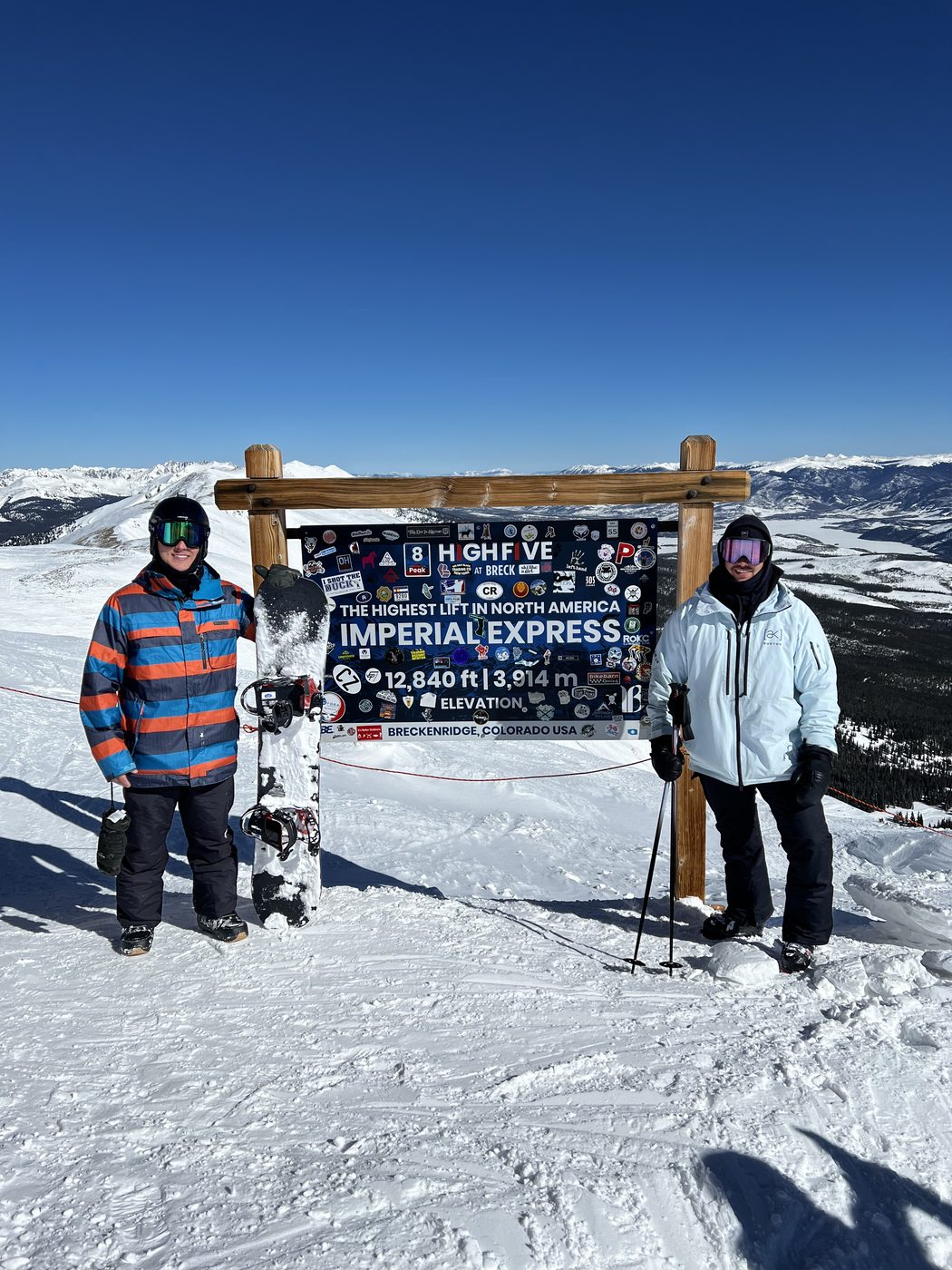
Every Colorado fourteener, by elevation
Colorado has 53 ranked fourteeners (peaks above 14,000 feet with at least 300 feet of prominence); some lists count 58 named summits over 14,000 feet. Every one is far above the roughly 8,000 feet where altitude sickness can start, so climbing or even day-hiking any of them from a lower base is a real altitude exposure. Here is the complete list, highest to lowest.
| # | Peak | Elevation | Range |
|---|---|---|---|
| 1 | Mount Elbert | 14,440 ft | Sawatch Range |
| 2 | Mount Massive | 14,428 ft | Sawatch Range |
| 3 | Mount Harvard | 14,421 ft | Sawatch Range |
| 4 | Blanca Peak | 14,351 ft | Sangre de Cristo Range |
| 5 | La Plata Peak | 14,343 ft | Sawatch Range |
| 6 | Uncompahgre Peak | 14,321 ft | San Juan Mountains |
| 7 | Crestone Peak | 14,300 ft | Sangre de Cristo Range |
| 8 | Mount Lincoln | 14,293 ft | Mosquito Range |
| 9 | Castle Peak | 14,279 ft | Elk Mountains |
| 10 | Grays Peak | 14,278 ft | Front Range |
| 11 | Mount Antero | 14,276 ft | Sawatch Range |
| 12 | Torreys Peak | 14,275 ft | Front Range |
| 13 | Quandary Peak | 14,271 ft | Mosquito Range |
| 14 | Mount Blue Sky (formerly Mount Evans) | 14,271 ft | Front Range |
| 15 | Longs Peak | 14,259 ft | Front Range |
| 16 | Mount Wilson | 14,252 ft | San Juan Mountains |
| 17 | Mount Shavano | 14,231 ft | Sawatch Range |
| 18 | Mount Princeton | 14,204 ft | Sawatch Range |
| 19 | Mount Belford | 14,203 ft | Sawatch Range |
| 20 | Crestone Needle | 14,203 ft | Sangre de Cristo Range |
| 21 | Mount Yale | 14,200 ft | Sawatch Range |
| 22 | Mount Bross | 14,178 ft | Mosquito Range |
| 23 | Kit Carson Mountain | 14,171 ft | Sangre de Cristo Range |
| 24 | Maroon Peak | 14,163 ft | Elk Mountains |
| 25 | Tabeguache Peak | 14,162 ft | Sawatch Range |
| 26 | Mount Oxford | 14,160 ft | Sawatch Range |
| 27 | Mount Sneffels | 14,158 ft | San Juan Mountains |
| 28 | Mount Democrat | 14,155 ft | Mosquito Range |
| 29 | Capitol Peak | 14,137 ft | Elk Mountains |
| 30 | Pikes Peak | 14,115 ft | Front Range |
| 31 | Snowmass Mountain | 14,099 ft | Elk Mountains |
| 32 | Windom Peak | 14,093 ft | San Juan Mountains |
| 33 | Mount Eolus | 14,090 ft | San Juan Mountains |
| 34 | Challenger Point | 14,087 ft | Sangre de Cristo Range |
| 35 | Mount Columbia | 14,077 ft | Sawatch Range |
| 36 | Missouri Mountain | 14,074 ft | Sawatch Range |
| 37 | Humboldt Peak | 14,070 ft | Sangre de Cristo Range |
| 38 | Mount Bierstadt | 14,065 ft | Front Range |
| 39 | Sunlight Peak | 14,065 ft | San Juan Mountains |
| 40 | Handies Peak | 14,058 ft | San Juan Mountains |
| 41 | Culebra Peak | 14,053 ft | Sangre de Cristo Range |
| 42 | Ellingwood Point | 14,048 ft | Sangre de Cristo Range |
| 43 | Mount Lindsey | 14,048 ft | Sangre de Cristo Range |
| 44 | Little Bear Peak | 14,043 ft | Sangre de Cristo Range |
| 45 | Mount Sherman | 14,043 ft | Mosquito Range |
| 46 | Redcloud Peak | 14,041 ft | San Juan Mountains |
| 47 | Pyramid Peak | 14,025 ft | Elk Mountains |
| 48 | Wilson Peak | 14,023 ft | San Juan Mountains |
| 49 | San Luis Peak | 14,022 ft | San Juan Mountains |
| 50 | Wetterhorn Peak | 14,021 ft | San Juan Mountains |
| 51 | Mount of the Holy Cross | 14,011 ft | Sawatch Range |
| 52 | Huron Peak | 14,010 ft | Sawatch Range |
| 53 | Sunshine Peak | 14,007 ft | San Juan Mountains |
The Sawatch Range holds the most fourteeners, including the two highest, Mount Elbert and Mount Massive. The popular front-range climbs near Denver (Grays, Torreys, Bierstadt, Longs, Quandary) are the ones most flatland visitors attempt first, and they are exactly where a fast drive up from sea level meets thin air.
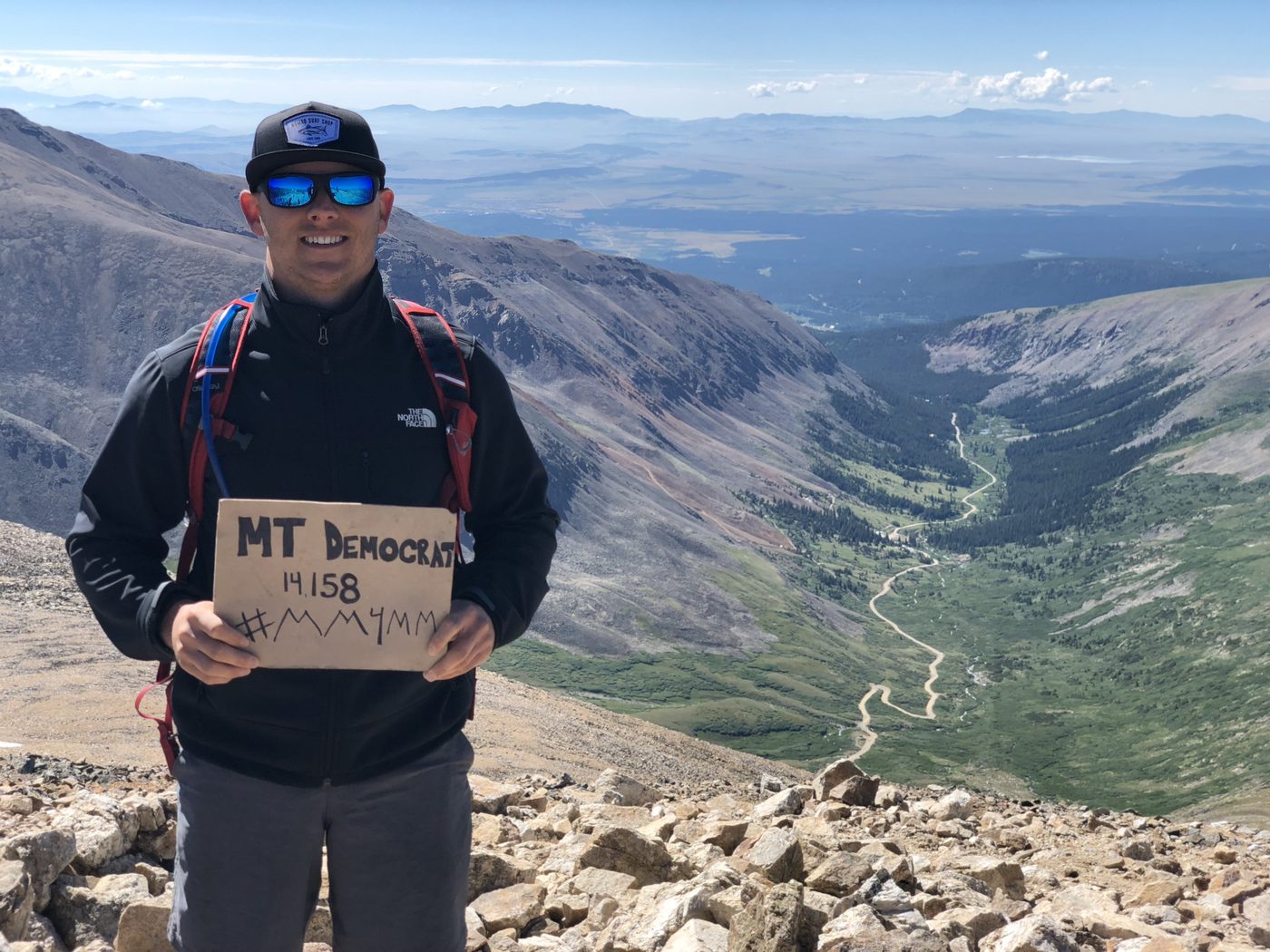
That is me on the summit of Mount Democrat, one of Colorado's 14ers, and I have climbed several others and ridden Breckenridge. I have felt the Colorado version of altitude sickness doing it: the headache the first night, the breathlessness on the last pitch. Coming from sea level to a 14er trailhead in one morning is exactly the fast ascent that brings it on. This page exists because I have lived it, not just read the guideline.
Bidwell Cranage, Bidwell Health founder, on the summit of Mount Democrat (Colorado).
Who benefits most from Diamox in Colorado
- You fly in from sea level and drive straight to a high town like Leadville or Breckenridge
- You are sleeping above about 8,500 feet
- You have had altitude sickness on a past mountain trip
- You only have a few days and cannot spend the first one taking it easy lower down
If you can build in a night in Denver, go up gradually, hydrate, take the first day easy, and skip alcohol early, you may not need medication at all. Acetazolamide is for people who cannot acclimatize slowly or who know their body reacts badly to altitude.
When to head down or get help
Ordinary altitude sickness is a headache, nausea, tiredness, and bad sleep, and it usually eases as you adjust or come down a little. But confusion, trouble walking a straight line, breathlessness at rest, or a cough with frothy spit are signs of severe altitude illness (HACE or HAPE). Those are emergencies even in a US ski town: descend and get care right away. No medication replaces going lower.
Get acetazolamide for Colorado online
Bidwell Health can review you for acetazolamide online and send it to your pharmacy, when it is clinically appropriate. Colorado is one of our eligible states.
A $45 asynchronous visit (no video, no membership), reviewed by a licensed clinician. If you live in Colorado or have already arrived, you can be seen here. If you are flying in from another eligible state, request it before you leave, because you start the medication the day before you go up to altitude.
FAQ
Do you get altitude sickness in Colorado?
Yes, often. Altitude sickness usually starts above about 8,000 feet, and most Colorado ski towns sleep between 8,000 and 10,000 feet. Visitors coming from sea level who go straight up to a mountain town are the ones who feel it most, with headache, nausea, and poor sleep in the first day or two.
Do I need Diamox for a Colorado ski trip?
Many flatland visitors benefit from it. Acetazolamide (Diamox) makes the most sense if you fly in from low elevation and go straight to a high town like Leadville or Breckenridge, if you have had altitude sickness before, or if you are sleeping above about 8,500 feet. If you can spend your first night in Denver and ease up, you may not need it.
Which Colorado towns are highest?
Leadville is the highest at about 10,150 feet, followed by Breckenridge near 9,600 feet. Vail, Estes Park, and Aspen sit roughly between 7,500 and 8,200 feet. Denver, the mile-high city, is 5,280 feet and rarely causes altitude sickness on its own; the mountains are where it happens.
How many fourteeners does Colorado have?
Colorado has 53 ranked fourteeners, peaks above 14,000 feet with at least 300 feet of prominence, and some lists count 58 named summits over 14,000 feet. Mount Elbert is the highest at 14,440 feet and Sunshine Peak is the lowest at 14,007 feet. Every one is well above the roughly 8,000 feet where altitude sickness can begin.
Can I get Diamox for Colorado online?
Yes. Colorado is one of our eligible states, so if you live in Colorado or are already here, a $45 asynchronous online visit works, no video and no subscription. If you are flying in from another eligible state, request acetazolamide before you leave, since you start it the day before you go up to altitude.
Related
- Altitude sickness medicine online, $45 visit
- When to start Diamox before altitude
- Do I need Diamox for Kilimanjaro?
- Do I need altitude medicine for Cusco?
Last reviewed: June 18, 2026 · References: CDC Yellow Book (High-Altitude Travel and Altitude Illness); Wilderness Medical Society Acute Altitude Illness guidelines (2024).